


Installing a generator can be a game-changer for your home, especially during unpredictable outages. But getting it right involves more than just picking a model off the shelf. You’ll want to take into account several key factors to guarantee a smooth installation process. From understanding your power needs to selecting the right location, each step plays a crucial role in your generator’s performance. Let’s explore these essential tips that can help you avoid common pitfalls.
Assess Your Power Needs
Before installing a generator, it’s important to evaluate your power needs. Start by listing the essential appliances and systems you want to keep running during an outage. Think about your refrigerator, heating or cooling systems, and any medical equipment.
Once you’ve got that list, check the wattage requirements for each item. Adding them up helps you understand the total power demand.
Don’t forget to take future needs into account as well. If you plan to expand your home or add new devices, factor that into your calculations.
Lastly, assess how long you might need the generator to run during an outage. This information will guide you in selecting the right generator type and capacity. Additionally, consider the advantages of whole-house generators, which provide increased reliability and long-lasting power compared to portable options.
Choose the Right Generator Size
Once you’ve assessed your power needs, it’s time to choose the right generator size for your home. First, take into account the total wattage you’ll require to power essential appliances during an outage. You can find this information on the appliance labels or in their manuals.
If you want to power more than just the essentials, factor in additional appliances and devices.
Next, think about your generator’s starting versus running wattage, as some appliances need extra power to start. To guarantee smooth operation, select a generator that can handle at least 20% more than your calculated wattage requirements.
Finally, don’t forget to take into account your home’s square footage and any specific needs, like heating or cooling systems. Choosing the right size guarantees your generator runs efficiently, keeping your home powered when you need it most. Additionally, understanding the power output of generators is crucial for making an informed decision.
If you need guidance, Crowe Electric is here to help you find the perfect fit!
Understand Local Regulations
When planning your generator installation, it’s crucial to understand local regulations to guarantee compliance and safety. Each municipality, including Norwell, MA, has specific codes that govern generator installations.
Start by checking with your local building department to gather necessary permits and requirements. This might include clearances from property lines, noise restrictions, and fuel storage regulations.
It’s also wise to consult with your electrician about these regulations, as they’re familiar with the local landscape and can verify your installation meets all standards. Ignoring these guidelines could lead to fines or, worse, unsafe conditions.
Additionally, consider homeowners’ association rules if you live in a community with such restrictions. Staying informed helps you avoid headaches down the road and verifies your generator operates safely and effectively. Moreover, a thorough assessment of home power needs before installation can help ensure that your generator is suitable for your specific requirements.
Select an Appropriate Location
After you’ve got a handle on local regulations, it’s time to choose the best spot for your generator.
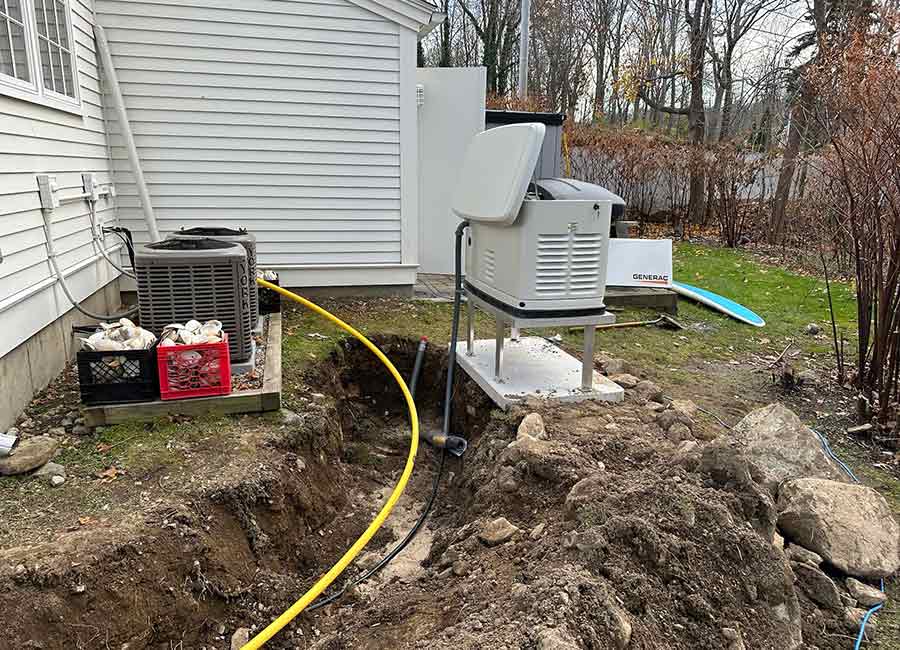
Consider placing it on a flat, stable surface away from your home, ideally at least five feet from windows and doors to prevent exhaust fumes from entering. Make sure it’s in a well-ventilated area to maximize airflow and minimize noise.
Avoid low-lying areas where water might accumulate, as this can damage your generator or create safety hazards.
Think about accessibility too; you’ll want to reach it easily for maintenance and emergency situations.
If you’re in a hurricane-prone area, consider securing it in a way that protects against high winds.
Finally, check that the location allows for easy connections to your home’s electrical system. Additionally, ensure that the placement aligns with local surge protector installation codes to guarantee safety and compliance.
Plan for Fuel Supply
As you plan for your generator installation, it’s crucial to guarantee a reliable fuel supply. First, determine what type of fuel your generator will use—whether it’s gasoline, diesel, propane, or natural gas. Each option has its advantages and considerations, so choose one that fits your needs best.
Next, assess your fuel storage options. If you opt for gasoline or diesel, make certain you have a safe and appropriate storage tank. For propane, check the availability of local suppliers and consider a larger tank for longer outages.
Don’t forget to factor in regular fuel delivery or refilling schedules, especially if you live in an area prone to power outages.
Planning for these details now can save you headaches later. Make sure to keep your fuel supply accessible and secure, guaranteeing you’re always ready when you need your generator the most.
Hire a Licensed Electrician
When it comes to installing a generator, hiring a licensed electrician is essential.
They’ll make certain your setup complies with all safety codes and regulations, giving you peace of mind.
Plus, their expertise guarantees that the installation process goes smoothly and efficiently.
Ensure Compliance With Codes
To guarantee your generator installation meets all local codes and regulations, hiring a licensed electrician is essential. They’ve the expertise to navigate the complexities of local requirements, affirming your setup is safe and compliant.
Consider these benefits of working with a licensed professional:
- Knowledge of Local Codes: They understand the specific regulations in Norwell, MA, which can vary from other areas.
- Safety Assurance: A licensed electrician assures that everything is installed correctly, minimizing risks and enhancing safety.
- Peace of Mind: You’ll have confidence knowing that the installation meets standards, potentially avoiding costly fines or issues down the line.
Investing in a licensed electrician is a smart move for a hassle-free generator installation.
Expertise in Installation Process
Hiring a licensed electrician is essential for a successful generator installation, guaranteeing you benefit from their specialized knowledge and experience. Their expertise helps you navigate local codes and safety regulations, minimizing risks during the installation process.
A professional will assess your home’s electrical system to determine the best generator type and placement, optimizing performance and safety.
Moreover, licensed electricians have the tools and skills needed to handle complex wiring and connections, preventing potential hazards.
With Crowe Electric, you can expect transparent communication and reliable service, giving you peace of mind. Trusting experts guarantees your generator operates efficiently and safely, so you’re always prepared for power outages.
Don’t compromise on quality—hire a licensed electrician for a hassle-free installation.
Prepare for Installation Day
Preparation is key to a smooth generator installation day. To guarantee everything goes off without a hitch, take these steps ahead of time:
- Clear the Installation Area: Remove any obstacles around where the generator will be placed. This helps the installation team work efficiently.
- Double-Check Your Permits: Make sure all necessary permits are secured. This avoids delays and keeps you compliant with local regulations.
- Confirm Your Appointment: Touch base with your installation company, like Crowe Electric, to confirm the date and time. This guarantees everyone’s on the same page.
Having these details sorted won’t only streamline the installation process but also provide peace of mind.
Test Your Generator
Before you rely on your new generator, it’s essential to perform pre-installation checks to guarantee everything’s in order.
Once that’s done, conducting load testing will confirm that your generator can handle the power demands when you need it most.
This step is key to achieving peace of mind and long-term reliability.
Perform Pre-Installation Checks
To guarantee your generator operates efficiently when you need it most, testing it before installation is essential.
Here’s what you should do:
- Check the fuel level: Confirm you have enough fuel to run the generator during the test.
- Inspect the oil: Look for the proper oil level and condition to avoid engine damage.
- Test the battery: Make certain the battery is charged and in good condition for reliable starts.
Conduct Load Testing
Once you’ve confirmed that your generator is properly set up, it’s important to conduct load testing to verify its performance under actual operating conditions.
This step guarantees your generator can handle the power demands of your home during an outage. Start by connecting essential appliances to the generator and gradually increasing the load.
Monitor how well it performs—check for any unusual noises, vibrations, or fluctuations in power output. Make sure it runs smoothly for a sustained period, ideally matching your typical usage during a blackout.
If you notice any issues, don’t hesitate to consult a professional. Remember, reliable power is significant, and load testing is a critical part of safeguarding your investment.
Schedule Regular Maintenance
While it’s easy to overlook, scheduling regular maintenance for your generator is essential to guaranteeing its reliability and longevity.
Ignoring maintenance can lead to unexpected breakdowns, especially during critical moments when you need your generator the most. By staying proactive, you not only extend the life of your unit but also maintain its efficiency.
Here are a few maintenance tasks you should schedule:
- Oil Changes: Regularly change the oil to keep the engine running smoothly.
- Battery Checks: Verify the battery is charged and connections are clean to avoid failures.
- Fuel System Inspections: Check for leaks or clogs in the fuel system to prevent operational issues.
Keep Safety in Mind
When installing a generator, keeping safety in mind is essential to prevent accidents and guarantee proper functionality. Start by choosing a location that’s dry, well-ventilated, and away from windows and doors. This helps avoid carbon monoxide buildup, which can be deadly.
Make certain you’re using a transfer switch to prevent backfeeding into the grid, which poses a danger to utility workers and your home.
Always read the manufacturer’s instructions thoroughly before beginning installation. Wear protective gear like gloves and goggles to shield yourself from potential hazards.
If you’re unsure about any step, don’t hesitate to call in a professional like Crowe Electric. Their team is trained to handle electrical work safely and efficiently.
Finally, keep the area clear of flammable materials and make sure that your generator is grounded properly. By following these guidelines, you’ll guarantee a safe and successful generator installation.
Conclusion
By following these ten smart tips, you’ll transform your generator installation into a seamless masterpiece, ensuring you’re never left in the dark, even during the most cataclysmic storms! You’ll become the envy of your neighbors, basking in the glow of uninterrupted power while they fumble with flashlights. So, take charge, stay prepared, and let your generator be the steadfast guardian of your home, ready to spring into action at a moment’s notice. Your peace of mind is worth it!