

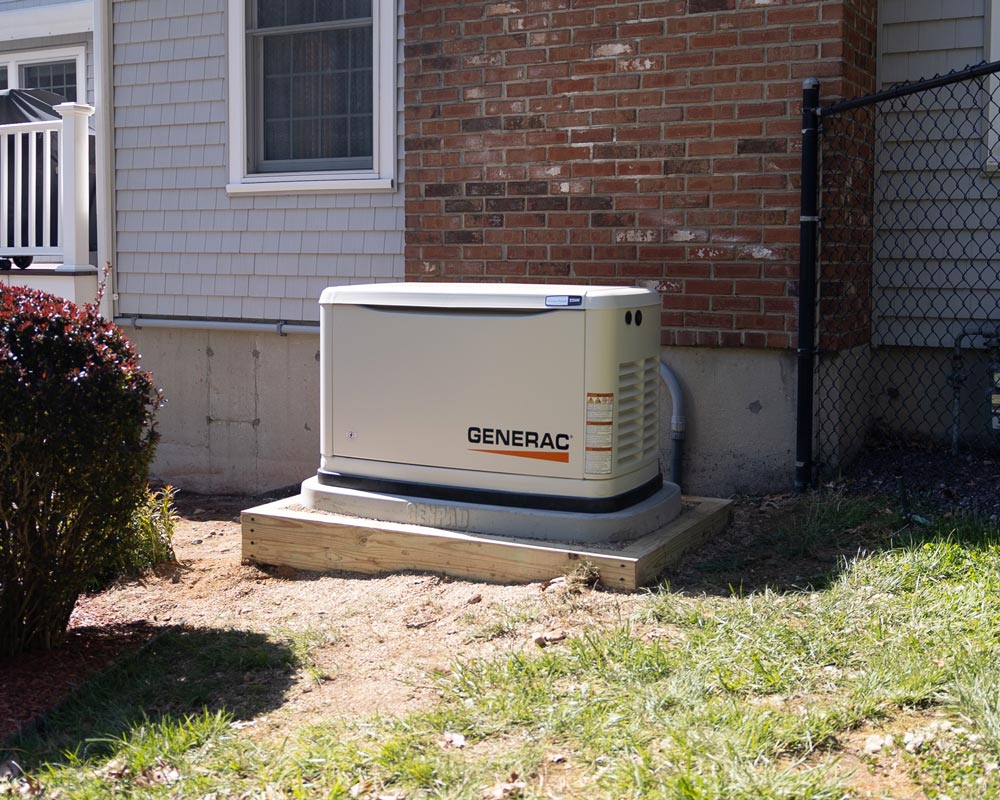
How long you can run a generator during a power outage depends mostly on its fuel supply and the load you put on it. A portable gasoline generator commonly runs under a day per tank, propane portables run hours to days depending on cylinder size, and propane standby units run for days until the tank needs a refill. Natural gas standby generators can run for extended periods, limited by the manufacturer’s maintenance intervals rather than fuel.
That matters in Hanson, where heavy tree cover, overhead lines, nor’easters, ice storms, and strong summer thunderstorms make extended outages a recurring part of life. Working in homes across Hanson, from the properties around Maquan and Wampatuck Ponds to the wooded lots off Route 27 and Route 58, our team sees the full range of backup power setups. Our electrical services in Hanson, MA cover generator assessment, installation, and the electrical work that makes either option safe.
Key Points
- Fuel and load set your runtime. The same generator runs much longer powering a refrigerator and a few lights than it does running a well pump, sump pump, and space heater.
- Carbon monoxide is the biggest danger. Never run a portable generator in a garage, basement, shed, or covered porch, even with a door open.
- Never backfeed through an outlet. Plugging a generator into a dryer or range outlet can kill utility line crews and start a fire. A transfer switch or interlock installed by a licensed electrician is the only safe connection.
- Private wells change the math. Many Hanson homes lose water when the well pump loses power, and reaching that pump requires a proper connection, not an extension cord.
- Standby units fit multi-day outages. A permanently installed generator with an automatic transfer switch starts on its own and removes refueling and backfeed risk.
Two Things That Matter More Than Runtime
Carbon Monoxide
Portable generator engines produce carbon monoxide in quantities that can kill a person in minutes. It is odorless and colorless, and the early symptoms, headache and drowsiness, are easy to mistake for ordinary fatigue during a stressful outage.
The rules here are absolute, and “don’t run it indoors” understates them considerably:
- Never operate a portable generator inside any enclosed or partly enclosed space. That includes garages, basements, crawl spaces, sheds, breezeways, and covered porches. Opening the garage door does not make a garage safe. CO accumulates faster than that ventilation removes it.
- Keep the unit well away from the house, with a substantial distance between the generator and any wall, and operate it outdoors in the open air.
- Point the exhaust away from the house and keep the generator clear of windows, doors, and vents, including basement windows and dryer or bath vents where exhaust can be drawn back inside.
- Install working CO alarms on every level of the home, particularly near sleeping areas, and confirm they work before storm season rather than during an outage.
- Leave immediately if anyone feels unwell while a generator is running, and get outside before trying to diagnose anything.
Manufacturer instructions govern specific placement distances for your unit, and they should be followed as written rather than estimated.
Backfeeding
This is the one that concerns us most as electricians, and the original version of this discussion online almost never mentions it.
Connecting a portable generator to your home’s wiring by plugging it into a receptacle, commonly a dryer or range outlet using a double-male cord, sends power backward through your panel and out onto the utility’s distribution lines. Those lines are what crews are working on to restore your power, and they are working on them under the assumption that they are dead. Backfeeding can kill them. It can also destroy your equipment and start a fire in your home when utility power returns.
There is a correct way to connect a portable generator to a house, and it is a transfer switch or an approved interlock kit, installed by a licensed electrician and permitted. It isolates your home from the utility so that the two sources can never be connected at once. It also lets you power hardwired equipment that a cord cannot reach, which for most Hanson homes means the well pump and the heating system.
That last point deserves emphasis locally. A great many Hanson properties are on private wells. No power means no well pump, which means no water, no toilets, and no showers, regardless of how many extension cords you run to the refrigerator. If a generator is being considered here, the well pump generally belongs at the top of the list, and reaching it requires a proper connection rather than a cord.
Runtime by Generator Type
With the safety framework established, here is what actually governs how long each type runs.
Type | What limits runtime | Practical expectation |
Portable, gasoline | Tank capacity and load | Commonly under a day per tank; requires repeated refueling |
Portable, propane | Cylinder size and number | Hours to days depending on cylinder capacity |
Inverter | Tank capacity and load, with variable engine speed | Often longer per gallon at light load than a conventional portable |
Standby, propane | Tank size, plus maintenance intervals | Days, bounded by the tank |
Standby, natural gas | Utility gas supply, plus maintenance intervals | Extended operation, bounded by service intervals rather than fuel |
Battery system | Battery capacity, load, and recharge source | Governed by stored capacity, not by an engine |
Portable Generators
Runtime per tank varies widely with load. The same unit powering a refrigerator and a few lights will run considerably longer than one running a sump pump, a space heater, and a well pump. Manufacturer runtime figures are typically quoted at partial load, so real-world numbers at heavy load will be shorter.
The practical constraint in an extended outage is fuel logistics. A multi-day outage means repeated trips for gasoline, and during a regional storm event the stations that have fuel may not have power to pump it. Households relying on portable units are wise to think about this before the storm rather than during it. Our portable generator guidance covers sizing for the loads that actually matter rather than the maximum nameplate figure.
Inverter Generators
Inverter units vary engine speed with demand rather than running at a fixed speed continuously, which generally improves fuel consumption at light load and makes them substantially quieter. They also produce cleaner power output, which matters for sensitive electronics.
The trade-off is typically capacity. Inverter units are often smaller than conventional portables at comparable cost, which affects what they can run.
Standby Generators
A permanently installed standby unit starts automatically when it detects an outage and runs through an automatic transfer switch, so there is no cord, no refueling, and no backfeed risk by design.
Runtime depends on fuel. Connected to a natural gas service, a standby unit can run for extended periods limited by manufacturer maintenance intervals rather than fuel supply. On propane, the tank is finite, and the practical question becomes tank size and how quickly a supplier can refill during a regional event.
Two clarifications on the “runs indefinitely” claim commonly made about these units. First, propane units are limited by their tank. Second, even natural gas units have maintenance intervals specified by the manufacturer, typically expressed in operating hours, and extended continuous operation will reach them. Our whole house generators service covers what a given unit can realistically sustain.
Battery Systems
These are frequently marketed as “solar generators,” which is a misnomer. They are batteries with an inverter, and they may or may not have solar charging capability. Runtime is determined by stored capacity against the load drawn, not by whether the sun is shining. Solar input affects how quickly the battery recharges, which in a New England December is a meaningful limitation.
Battery systems have real advantages: silent, no emissions, safe to use indoors. Their limitation is capacity relative to whole-house loads, particularly motor loads like well pumps.
Managing a Generator Through an Extended Outage
Beyond CO and backfeeding, several operational points matter during multi-day use:
- Shut down and let the engine cool before refueling. Gasoline spilled on a hot engine or exhaust can ignite. This, rather than overheating, is the real reason to cycle a portable generator down periodically.
- Check oil at every shutdown. Small engines under continuous heavy load consume oil, and running one low is how they fail permanently mid-outage.
- Manage load deliberately. Running everything at once shortens runtime and stresses the unit. Prioritize refrigeration, heat, the well pump, and medical equipment, and stagger the rest.
- Keep the unit dry without enclosing it. A purpose-built generator cover or canopy designed for operation is appropriate. A shed, a garage, or a tarp draped over the unit is not, because each either traps CO or traps heat.
- Store fuel properly and treat it. Gasoline degrades, and stale fuel is a common reason a generator will not start when it is finally needed. Fuel stabilizer and approved containers stored away from the unit and away from ignition sources are the baseline.
- Do not connect anything through a cord that should be on a transfer switch. If you find yourself looking for a way to get power to a hardwired appliance, that is the signal to call an electrician rather than improvise.
The Question Behind the Question
Homeowners asking how long a generator runs are usually asking something else: whether their setup will actually get them through the kind of outage Hanson gets.
That is a different calculation, and it comes down to matching the equipment to the outage profile and the household. A few considerations specific to this area:
- Well and septic mean water service depends on electricity, which raises the stakes considerably beyond food spoilage and inconvenience.
- Winter outages mean heating system operation matters, and most heating systems, including oil and gas units, need electricity for controls and circulation.
- Extended restoration times in heavily wooded areas mean multi-day planning rather than overnight planning.
- Sump pumps in homes near the ponds and wetter parcels around town are not optional during a spring storm.
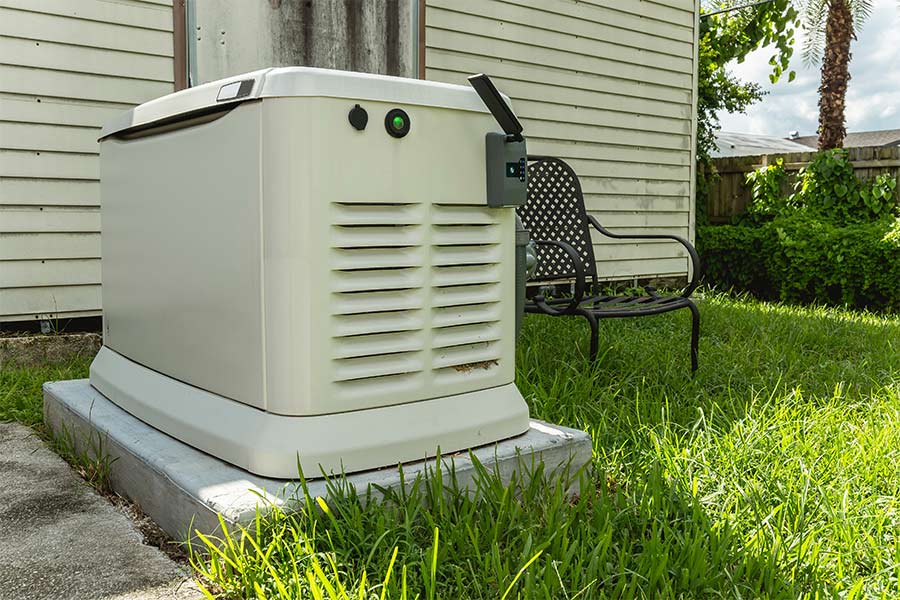
If a portable generator plus cords covers your situation, that is a legitimate answer. If the list above describes your house, a permanently installed unit with an automatic transfer switch is usually the option that actually meets the need, and generator installation in Hanson, MA includes the load assessment that determines which size fits.
Choosing the Right Backup Power for Your Hanson Home
The useful way to decide is to answer three questions in order rather than starting from a product.
- What has to keep running? Make the actual list: well pump, heating system, refrigeration, sump pump, medical equipment, and anything else you cannot do without. That list determines the capacity you need, and it is usually different from what people assume.
- How long do your outages last? An area that loses power for four hours has a different answer than one that loses it for three days.
- And how will it connect? This is the question that separates a safe installation from a dangerous one. Anything that powers hardwired equipment requires a transfer switch or interlock, and that is licensed, permitted work regardless of which generator you buy.
Answer those three and the equipment choice usually makes itself.
Crowe Electric works on portable and standby generator installations throughout Hanson and the surrounding South Shore, including the transfer switch and panel work that makes them safe and code compliant. When you want an assessment of what your household actually needs, contact our team today to schedule a consultation.