

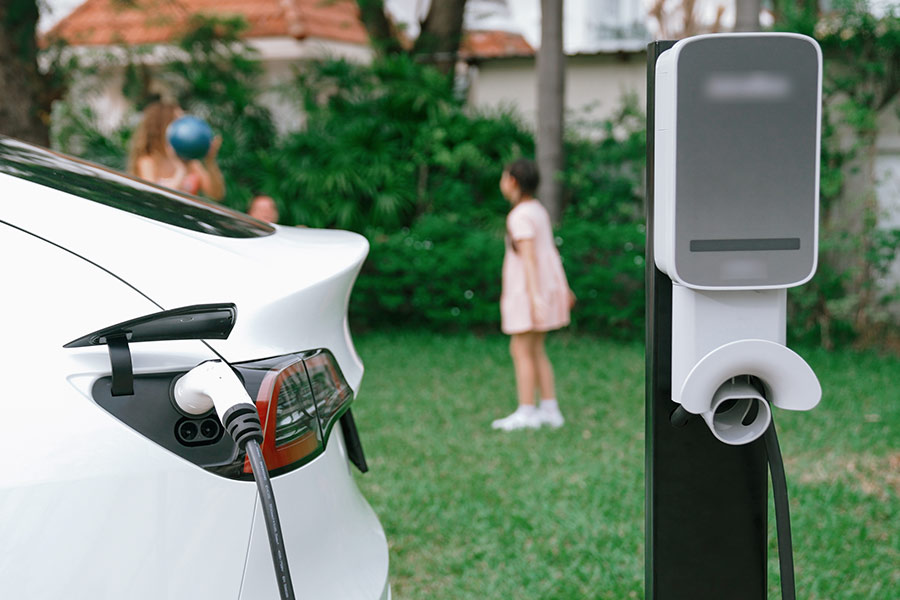
Electric vehicle adoption is accelerating across Massachusetts, and Plymouth homeowners are increasingly looking to upgrade their properties with reliable home charging solutions. Rather than depending on public charging stations scattered along Route 44 or near the waterfront downtown, having a dedicated home charger offers convenience, cost savings, and the confidence of starting every day with a full charge.
At Crowe Electric, our team handles EV charger installation for Plymouth homeowners from start to finish, including everything from electrical assessment to final commissioning. Here is what that process looks like and why professional installation is the right approach.
Choose the Right Charger Level for Your Home
Not all EV chargers are created equal. There are three distinct tiers, and the differences between them matter when planning a home installation.
Level 1 chargers run on a standard 120-volt outlet, the kind already present in most garages and driveways. No new equipment is required, but the tradeoff is slow charging, typically adding only 3 to 5 miles of range per hour. For drivers who cover minimal daily distances, this can work, but most Plymouth households find it limiting quickly.
Level 2 chargers operate on 240-volt circuits and represent the practical standard for residential EV charging. A full charge that might take overnight or longer on a Level 1 setup can be completed in a matter of hours with a Level 2 unit. These chargers require professional installation, including a dedicated circuit and appropriate outlet configuration, but the convenience and efficiency gains are substantial.
Level 3 chargers, also known as DC fast chargers, deliver the fastest possible charge but are designed for commercial use. They are not a practical or cost-effective fit for residential properties.
For most homeowners in Plymouth, a Level 2 installation is the clear recommendation.
Assess Any Obstacles Before Installation Begins
Before any work begins, a thorough pre-installation assessment is essential. In our service calls throughout Plymouth, this step frequently surfaces details that need to be addressed before the charger itself can go in.
A few key considerations include:
- Permitting requirements: Plymouth, like most Massachusetts municipalities, requires a permit for electrical work of this scope. A licensed electrician handles this as part of the installation process, ensuring the work meets current building codes and passes inspection.
- Rental properties: Homeowners who rent need written landlord approval before proceeding. This should be secured before scheduling installation.
- Utility coordination: Depending on the current electrical service capacity of the home, the local utility may need to be involved to confirm that the incoming supply can support the added load.
Working in homes across Plymouth, from older properties near the historic Town Brook area to newer construction in North Plymouth, our team regularly encounters a range of starting conditions. A proper assessment ensures there are no surprises once the work is underway.
Install a Dedicated Circuit for the EV Charger
A Level 2 EV charger is not simply a matter of swapping in a new outlet. The electrical infrastructure supporting it needs to be purpose-built for the application.
Professional EV charger installation typically involves:
- Installing a high-voltage 240-volt outlet in the charging location
- Running appropriately rated wiring from the electrical panel to the charger
- Adding a dedicated circuit breaker sized specifically for the charger’s load
- Ensuring all connections are properly secured and code-compliant
The dedicated circuit breaker is a critical safety component. EV chargers draw a sustained, heavy electrical load, and without a properly sized dedicated breaker, the risk of tripping the main panel or creating unsafe conditions is real. Licensed electricians size and install this equipment correctly, accounting for both the charger’s rated amperage and the overall load profile of the home.
Address Outlet Configuration and Placement
The physical location and configuration of the outlet matter just as much as the electrical infrastructure behind it. Based on what we see in Plymouth properties, this is often where individual homes vary the most.
Some homeowners have an existing 240-volt outlet in a usable location. Others need one installed from scratch. And in some cases, the outlet exists but is positioned in a way that makes daily use awkward, requiring relocation before the installation makes practical sense.
An electrical outlet installation or relocation handled by a licensed electrician ensures the outlet ends up exactly where it needs to be, meets all applicable code requirements, and is wired correctly for the specific charger being installed. These are not adjustments that should be improvised.
Follow Manufacturer Requirements to Protect Your Investment
Every EV charger comes with manufacturer specifications that govern where and how it should be installed. These guidelines affect both the performance of the unit and the validity of the warranty.
A few details that commonly come up:
- Many manufacturers recommend indoor installation where possible, even for units rated for outdoor use. Plymouth’s coastal weather and seasonal temperature swings make this consideration particularly relevant.
- Warranty coverage on most EV chargers is contingent on professional installation. A charger installed without a licensed electrician may leave the homeowner without recourse if a defect or damage occurs.
- Some units have specific requirements around circuit amperage, conduit type, or clearance distances that a qualified installer will already be familiar with.
If the existing electrical panel cannot support the added circuit without risk of overload, a broader electrical panel upgrade may be worth evaluating as part of the project. This is especially relevant in older Plymouth homes where the original panel predates the electrical demands of modern households.
Reliable EV Charging Starts With the Right Installation
Home EV charging is a long-term investment in convenience, efficiency, and property value. Getting the installation right the first time, with proper permitting, correct circuit sizing, and equipment placed where it will actually be used, is what makes that investment pay off.
Crowe Electric has helped Plymouth homeowners make the transition to home EV charging with the same commitment to quality workmanship and transparent communication we bring to every project. If you are ready to move forward with a home charging setup, contact our team today to schedule your EV charger installation.