

Homes across Braintree are asking more of their electrical systems than they ever have before. Between electric vehicles in the driveway, ductless mini splits running through humid South Shore summers, and home offices that never really shut down, the panel in the basement is often the last piece of the house to catch up.
Preparing for that added load is a straightforward process when it is handled in the right order: understanding what the existing panel can actually support, recognizing when it has reached its ceiling, weighing the upgrade paths available, and making sure the finished work satisfies local code. This guide walks through each stage from the perspective of the electricians who work in these homes every week.
Assessing Your Current Electrical Panel Capacity
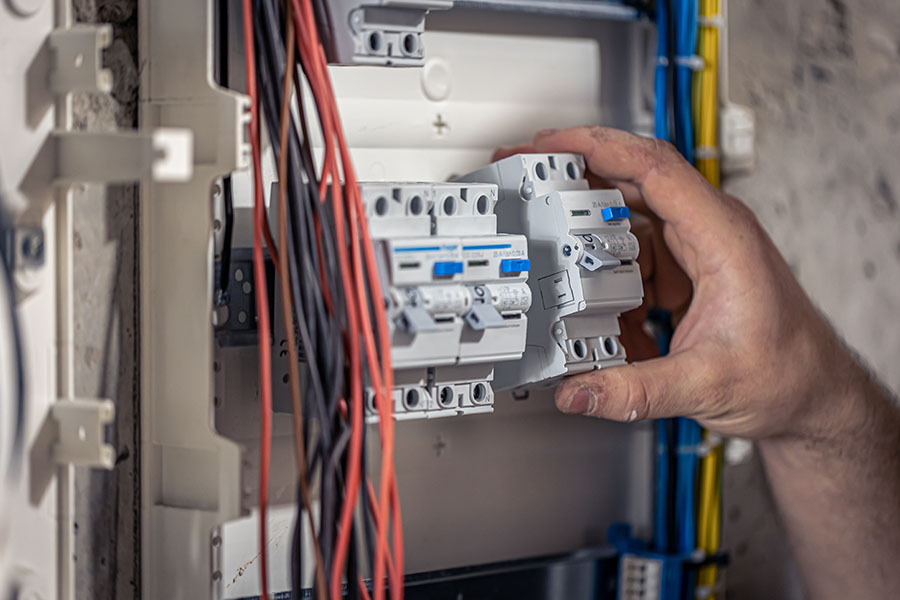
Panel capacity is simply a measure of how much power a home can safely draw at one time. In our service calls throughout Braintree, from the older colonials near Braintree Five Corners to the newer construction out past Braintree Highlands, we find a wide spread of capacities still in active use.
Three factors determine what a panel can realistically handle:
- Amperage rating. Most homes we open are rated at 100, 150, or 200 amps. The rating is typically printed on a label inside the panel door or stamped on the main breaker itself.
- Available circuit space. A panel can carry the right amperage and still be out of room. Once every slot is filled, adding a dedicated circuit for a new appliance is no longer possible without changes to the equipment.
- Physical condition. Rust, corrosion, heat discoloration, and loose connections all point to problems that a homeowner would have no safe way to evaluate from the outside.
This assessment is a job for a licensed professional. Opening a live panel exposes conductors that remain energized even when the main breaker is off, which is why our team handles this inspection as part of our electrical services in Braintree rather than walking customers through it over the phone.
The practical takeaway for most Braintree households is this: moving from 100 amps to 200 amps opens up enough headroom for EV charging, ductless air conditioning, media centers, and the kitchen loads that come with a full renovation, all running at the same time without competing for capacity.
Identifying Signs That Your Panel Needs an Upgrade
A panel rarely fails without warning. It tells you first, and the signals are consistent enough that we can usually predict what we will find before we take the cover off.
The indicators we see most often in Braintree homes include:
- Breakers that trip repeatedly. Resetting the same breaker week after week is not a nuisance to live with. It is protective equipment doing its job on a circuit that is being asked for more than it was designed to deliver.
- Lights that dim or flicker when a large appliance cycles on, particularly noticeable when a well pump, air handler, or window unit starts up.
- Outlets or cover plates that feel warm to the touch, which points to resistance building somewhere in the connection.
- Age. A panel past the twenty-year mark was engineered for a household that owned a fraction of today’s connected devices. Certain older brands also carry known safety concerns that warrant replacement regardless of how the panel appears to be performing.
- Visible rust or corrosion, which is worth watching closely in East Braintree and in homes near the Monatiquot River, where basement humidity and coastal storm moisture accelerate the problem.
- Planned additions. A Level 2 charger, a hot tub, a pool, or a finished basement all represent a step change in demand rather than a small increase.
Any one of these justifies a professional evaluation. A modern electrical panel upgrade delivers more than added capacity: it brings current safety technology, cleaner load distribution, and equipment that insurers and home inspectors recognize as sound.
Exploring Options for Upgrading Your Electrical Panel
Once an upgrade is on the table, the right configuration depends on the house, the service coming in from the street, and what the household expects to add over the next decade.
- Sizing the service. Two hundred amps has become the practical baseline for Braintree homes planning any meaningful additions. Some larger properties, or homes with detached garages and workshops, are better served by a higher-capacity service or a subpanel that distributes the load closer to where it is used.
- Panel type. Homes still operating on fuse boxes should be moved to a breaker-based system. Modern circuit breakers reset rather than requiring replacement, respond faster to fault conditions, and support arc-fault and ground-fault protection that fuses cannot provide.
- Smart panels. Newer equipment can monitor consumption circuit by circuit, shed non-essential loads automatically when demand peaks, and integrate with solar or battery storage. For households tracking energy costs closely, this visibility changes how the system gets used.
- Backup power. Braintree loses power in winter nor’easters and in the summer thunderstorms that roll through off the bay. Pairing a panel upgrade with a whole-house generator is far simpler when the transfer equipment is planned into the work rather than retrofitted afterward.
Every one of these decisions involves load calculations, utility coordination, and code compliance. A licensed electrician evaluates the existing service, confirms what the incoming feed will support, and specifies equipment that matches both the current demand and what is coming.
Installing Additional Circuits for New Power Demands
Not every capacity problem calls for a full panel replacement. In many Braintree homes, the panel itself is sound and the real issue is distribution: too many demanding devices sharing circuits that were never intended to carry them.
Working in homes across Braintree, these are the areas where we most often add dedicated circuits:
- Kitchens, where induction ranges, wall ovens, and secondary refrigerators each draw heavily and should not share a branch.
- Garages and driveways, where EV charging equipment requires its own properly sized circuit and disconnect.
- Home offices, where workstations, monitors, and networking gear on a single legacy circuit create a persistent low-grade overload.
- Finished basements and additions, common in the neighborhoods off Washington Street and Union Street, where new living space is frequently tied into circuits already serving the floor above.
- Outdoor equipment, including pool pumps, hot tubs, and landscape lighting, all of which require weather-rated protection.
The work begins with a load calculation to confirm the panel can absorb the additional demand, followed by routing new conductors and terminating them to code. Our electricians handle the permitting and inspection alongside the installation, and financing options are available to make larger upgrades more manageable for Braintree households planning several improvements at once.
Ensuring Safety and Compliance With Local Regulations
Electrical work in Braintree falls under the Massachusetts Electrical Code, and the town’s inspectional services department enforces it. Compliance is not paperwork for its own sake. It is what protects a homeowner at resale, at insurance renewal, and in the event of a claim.
Three requirements apply to essentially every panel project:
- Permits. Panel replacements, service upgrades, and new dedicated circuits all require a permit pulled before work begins. A licensed contractor files this as a standard part of the job.
- Inspection. Completed work is inspected by the town before the utility energizes an upgraded service. Unpermitted work discovered later frequently has to be opened up and redone.
- Documentation. Permits, inspection sign-offs, and equipment specifications should be kept with the home’s records. Buyers and their inspectors ask for them, and their absence tends to surface at the worst possible moment in a transaction.
Utility coordination adds another layer. Increasing service capacity often means the meter socket, service entrance conductors, and the connection at the weatherhead all need to be addressed, which requires scheduling with the utility. This is routine work for a licensed contractor and genuinely difficult for anyone else to navigate.
Preparing Your Braintree Home for Tomorrow’s Power Demands
The right time to address panel capacity is before the household needs it, not the week the new vehicle arrives or the morning the breaker stops holding. A home that has been properly evaluated, correctly sized, and permitted is one where adding the next appliance is a scheduling question rather than a structural one.
If you are weighing an upgrade, deciding between added circuits and a full panel replacement, or simply want a clear read on what your current service can support, the team at Crowe Electric knows these homes and these neighborhoods. We are glad to walk through your options and give you a straight answer about what your house actually needs. Contact our team today to arrange an evaluation.