

Most homeowners rarely think about their electrical system until something goes wrong. But understanding the basic infrastructure behind your home’s power, specifically whether you have a breaker panel or a fuse box, can help you make sense of problems when they arise and make informed decisions about upgrades.
In Cohasset, MA, where a significant portion of the housing stock dates back to the post-World War II building boom, fuse boxes are more common than many homeowners realize. Our electrical services in Cohasset team at Crowe Electric regularly works with both system types throughout the area, from homes near Little Harbor to older properties along Jerusalem Road.
What Is a Fuse Box?
A fuse box protects a home’s electrical circuits from overloads by using individual fuses, each containing a thin strip of metal designed to melt when too much current flows through it. When a circuit is overloaded, the fuse blows, cutting power to that circuit and preventing damage to wiring or connected devices.
Fuse boxes were the standard residential electrical protection system through the mid-20th century. In Cohasset homes built before the 1960s, encountering an original fuse box is not unusual. While fuse boxes can operate safely when properly maintained and used within their rated limits, they come with practical constraints that become more apparent as a home’s electrical demands increase.
One key limitation is capacity. Fuses are rated for specific amperage levels, and older fuse boxes were designed around the modest electrical loads of their era. Adding modern appliances, HVAC equipment, or home office setups to a system built for mid-century demand can push a fuse box beyond what it was designed to handle.
What Is a Breaker Panel?
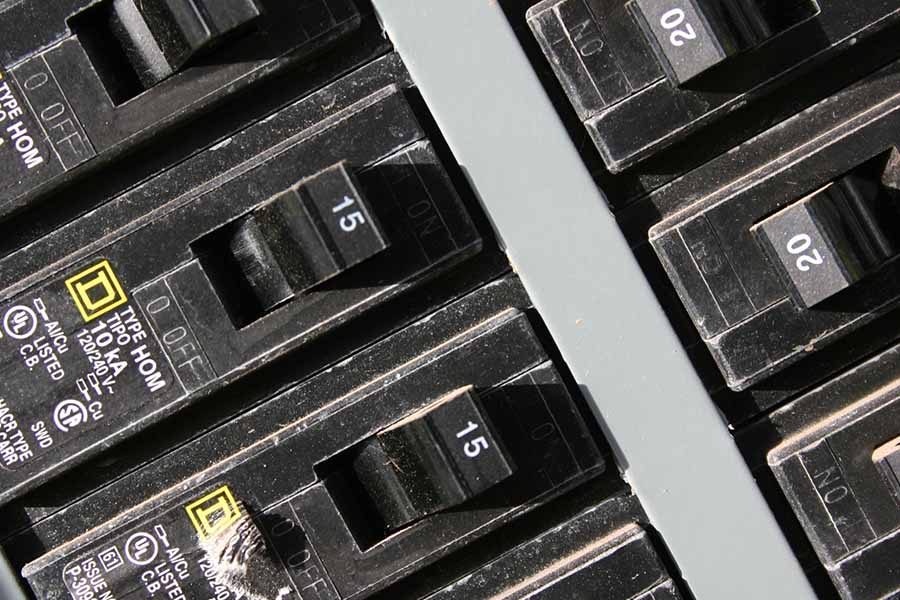
A circuit breaker panel replaced the fuse box as the standard residential electrical protection system beginning in the mid-1960s. Rather than a consumable fuse, each circuit in a breaker panel is controlled by a reusable switch. When a circuit is overloaded, the breaker trips, cutting power to that circuit. Restoring power is as simple as resetting the switch once the underlying issue is addressed.
Circuit breakers can handle a certain amperage per switch, and panels can be configured with breakers of varying sizes to match the load requirements of individual circuits throughout the home. When additional capacity is needed for a new appliance or room addition, a licensed electrician can replace a breaker with one rated for higher amperage or add circuits as needed.
A properly maintained circuit breaker can have a service life of up to 40 years, though individual breakers can and do fail over time and should be tested and replaced when they no longer perform reliably.
Breaker Panel vs. Fuse Box: Key Differences
Reusability
The most immediate practical difference is that circuit breakers are reusable and fuses are not. A blown fuse must be replaced before power can be restored to that circuit. A tripped breaker requires only a reset. For homeowners, this difference matters most in the moment something goes wrong, when locating and replacing the correct fuse is an extra step that circuit breaker panels eliminate.
Fire Risk and Safety
Both systems provide overload protection, but the manner in which they do so carries different risk profiles. Fuses are safe when used correctly and maintained within their rated amperage. The risk comes from misuse, specifically when a fuse is replaced with one rated for higher amperage than the wiring in that circuit can safely support. This practice, sometimes called over-fusing, bypasses the protection the fuse is meant to provide and creates a genuine fire hazard.
Circuit breakers do not carry this same risk. They are sized to the circuit and cannot be casually substituted with a higher-rated component.
Insurance and Code Compliance
The Massachusetts Electrical Code no longer permits new fuse box installations, though existing fuse boxes in older homes can remain in service under current code. The more common pressure point for Cohasset homeowners is insurance. Many homeowners insurance carriers are reluctant to write policies for properties with active fuse boxes, and some will decline coverage outright or require replacement as a condition of the policy. This is an important practical consideration for homeowners who have not yet addressed an aging fuse box.
Capacity for Modern Electrical Demands
Based on what we see in Cohasset properties, older homes with fuse boxes were typically wired with far less capacity than modern households require. The combination of limited amperage and an aging panel often means these systems cannot safely support the electrical load that current appliances, heating and cooling systems, and home technology place on them. An electrical panel upgrade is frequently the right long-term solution for homes still relying on fuse box infrastructure.
What Age of Home Is Likely to Have Each System?
Circuit breaker panels became the standard in new American residential construction beginning in the mid-1960s. Homes built after that point almost universally use circuit breakers. Homes built before the mid-1960s, particularly those that have not had electrical work done in recent decades, may still have their original fuse box intact.
In Cohasset, where residential development accelerated significantly in the 1950s and early 1960s, a meaningful portion of local homes fall into this category. Neighborhoods closer to the historic town center and areas with older Colonial and Cape-style housing stock are the most likely places to encounter original fuse box installations.
If you are unsure which system your home has, the electrical panel is typically located in a basement, utility room, or garage. A fuse box will have round glass or ceramic fuses visible through the panel door. A breaker panel will show rows of toggle switches.
When to Call a Licensed Electrician
Understanding what type of panel your home has is useful, but diagnosing problems, performing repairs, or upgrading either system requires a licensed electrician. Working inside electrical panels involves live components and carries serious safety risks.
For Cohasset homeowners dealing with frequently blown fuses, tripping breakers, or a panel that cannot support current electrical demands, an electrical panel repair and replacement assessment provides a clear picture of what the system needs. If a fuse box replacement is the right course of action, the transition to a modern breaker panel resolves capacity limitations, simplifies daily use, and addresses the insurance concerns that often accompany older systems.
For situations that cannot wait, Crowe Electric provides 24-hour emergency electrical services to Cohasset homeowners throughout the area, including Little Harbor, North Cohasset, and properties near the Cohasset Golf Club and Jerusalem Road corridor.

Keeping Your Cohasset Home’s Electrical System in Good Shape
Whether your home has a circuit breaker panel or an older fuse box, understanding how the system works and knowing when to call for professional support makes a real difference in how you respond when something goes wrong.
Crowe Electric works with Cohasset homeowners to inspect, service, and upgrade electrical systems of all types, with the local experience and honest guidance that makes complex decisions straightforward. If you have questions about your panel or want a professional assessment of your home’s electrical infrastructure, contact our team today to schedule a visit.