

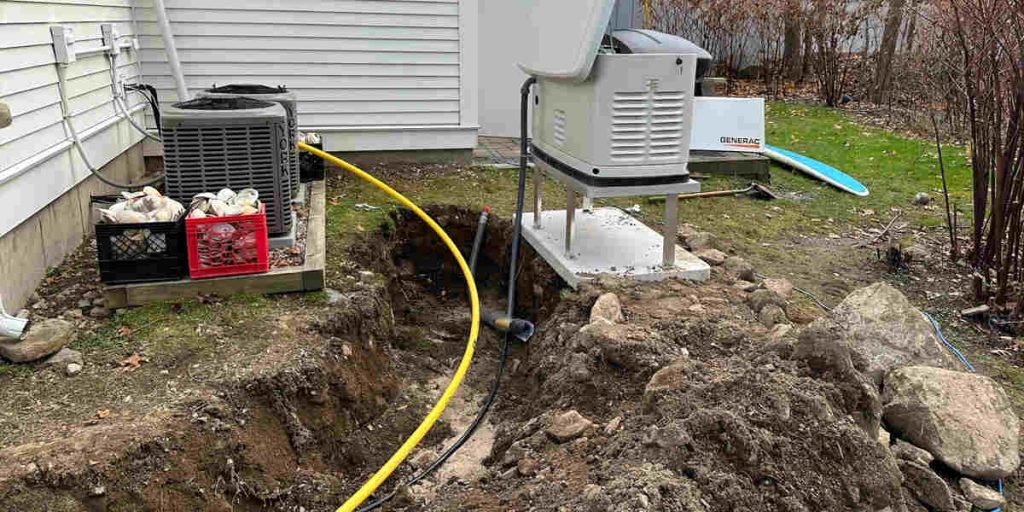
You may need to install outdoor electrical wire to operate lighting, pumps, and other electrical systems or to run power to outbuildings. Depending on the setup, you may choose either overhead or below-ground wiring. With projects that call for trench wiring, it’s important to know how deep to bury electrical wire.
Installing outdoor electrical wiring is a job for professionals. Our trusted electricians in Plymouth, MA, will make sure that burial depth matches National Electrical Code (NEC) requirements and State of Massachusetts regulations.
Why Install Underground Wiring?
Many older homes have overhead wiring that conducts power from the grid. While overhead wires can be a quick solution, these exposed power lines carry serious risks. They may suffer damage from storms or tangle in tree branches. They also require poles for support, which can be unsightly and take up valuable space.
Underground wiring is far better protected from damage. It’s less exposed to accidents, weather events, sabotage, and rodents. Wiring buried at the proper depth extends the electrical system’s longevity and may protect buildings from voltage fluctuations.
How Deep To Bury Wiring in Plymouth, MA?
Generally, the permitted depth for low-voltage wire (up to 30 volts) is at least six inches below ground, while 240-volt wiring must sit at least 18 inches below ground. However, any installation of underground wiring must comply with state and municipal codes, so make sure the technician you hire knows how deep to bury electrical wire in Plymouth, MA.
NEC standards aim to protect residents from electrical hazards, and it’s critical to obey these guidelines when planning to install or upgrade outdoor wiring. Keep in mind NEC codes may not apply to low-voltage systems like some landscape lights.
Some regions with extremely cold conditions and deep ground freezes (like some areas of Minnesota or Alaska) may call for deeper burial for electrical wiring. This usually isn’t an issue in Plymouth and the Greater Boston area.
Using Electrical Conduits
Electrical conduits are plastic or metal piping encasing electrical wiring. Using conduits helps protect wiring from heat, moisture, corrosion, mechanical damage, and pests that can chew on wires. Wiring in a conduit is far less likely to break or cause a fire hazard. Moreover, whenever outdoor wiring needs repair, conduit colors help the technician locate the correct wires quickly.
Building codes usually require conduits for electrical safety unless you’re using direct burial wire. The NEC provides standards for using conduits, such as how many wires a conduit can contain and the acceptable number of bends. It’s vital to use a robust, liquid-tight conduct that can resist corrosion and mechanical stress.
Factors That Determine Wire Burial Depth
Apart from state and local building codes, the question of how deep to bury electrical wire also depends on:
- Soil. Burying conduits deep enough can be difficult in very rocky soil. An experienced technician can let you know whether you expect any problems with installing outdoor wiring because of hard soil.
- Conduit type. For example, direct-bury cables and PVC conduits may require deeper burial than rigid metal conduits.
- Existing lines. Make sure you locate any existing buried wiring so that it doesn’t interfere with your new line. It’s always advisable to run the line as straight as possible from the power source to the outlet, with minimum conduit turns.
- Project scope. Make sure the underground wiring is deep and secure enough if it needs to withstand decades of use and possibly future upgrades, e.g., wiring for outbuildings and garages.
Trenches for Outdoor Electrical Wiring
To bury electrical wire underground, the workers must first dig a trench. Very hard, compacted soil must require some loosening up.
Trench width matters almost as much as its depth. It’s advisable to mark the intended width before digging. OSHA recommends that electrical wire trenches should be 18 or more inches wide. This width is usually enough to comply with state and city codes as well.
Keep in mind that a trench must be wider if you intend to use it for both electrical and water lines. Water pipes and electric lines must be at least 12 inches apart.
Call Us for Professional and Secure Outdoor Electrical Wire Installation in Plymouth, MA
Do you need to install outdoor wiring? Call our team at Crowe Electric. Our certified technicians know how deep to bury electrical wire to ensure your system’s safety and longevity.
We also offer many other electrical services, like electrical outlet installation, electrical panel repair, and surge protection in Plymouth and the Greater Boston area. Call 781-896-2606 or book our services online.