

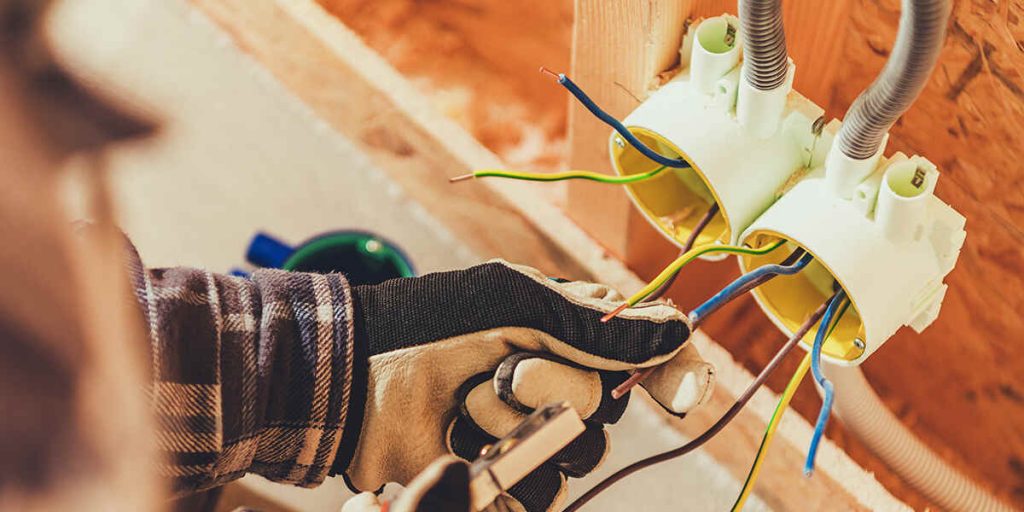
The most common type of electrical wire used in homes is nonmetallic (NM) cable, which powers your outlets, switches, and lights. Homes also use underground feeder cable outdoors, armored cable in exposed spots, and low-voltage wire for thermostats and security systems. Color codes on each sheath and wire tell you what it does.
Your outlets and switches power your appliances, but a hidden network of wiring delivers that electricity safely through the house. Crowe Electric is a licensed residential electrician team serving Marshfield, MA, and the South Shore, and we know home wiring can be confusing. Use this guide to learn the basics.
Key Points
- NM cable is the most common type of electrical wire in homes.
- Sheath color shows wire size: white for 14-gauge, yellow for 12-gauge, orange for 10-gauge.
- Green or bare copper wires are ground, white wires are neutral, and black or red wires are hot.
- Gray underground feeder cable powers outdoor lighting and detached buildings.
- Older homes may have knob-and-tube or aluminum wiring that needs an inspection.
Why Should You Understand Common Types of House Wiring?
Understanding the common types of house wiring helps you plan safe home improvements and pass inspection when you sell. You’ll likely run into your home’s wiring when you track down an electrical problem or remodel a room to add living space, and both jobs can affect the wiring.
All residential wiring must meet the National Electrical Code and Marshfield ordinances. Wiring that falls short can cause power fluctuations, insufficient power, or a devastating electrical fire.
Knowing what type of electrical wire is used in homes helps prevent these problems. It also helps your electrical system pass inspection if you decide to sell your house.
What Is the Difference Between Electric Cables and Electric Wires?
An electrical wire is a single conductor, while a cable bundles two or more wires inside one outer jacket. Many people use the terms interchangeably, but they mean different things in home wiring.
Electrical wires are individual conductors that carry electricity. They can be bare or insulated and made of any conductive material.
What Do Cable Sheath Colors Mean?
The sheath color on residential NM cable tells you the wire size and the circuit amperage it supports:
|
Sheath color |
Wire gauge |
Circuit |
|
White |
14-gauge |
15-amp |
|
Yellow |
12-gauge |
20-amp |
|
Orange |
10-gauge |
30-amp |
|
Black |
6- or 8-gauge |
60- or 45-amp |
Nonmetallic Cables
Nonmetallic (NM) cable is the recommended type of electrical wire for homes. NM cable holds either three conductors and a ground wire or two conductors and a ground wire inside a flexible sheath. You’ll find color-coded NM cable almost everywhere in a house, powering everything from outlets to appliances.
- 14-2 NM Cable: General lighting switches and outlets on a maximum 15-amp circuit
- 14-3 NM Cable: Split receptacles and three-way switches on a 15-amp circuit
- 12-2 NM Cable: 20-amp receptacles in kitchens, garages, laundry rooms, and bathrooms
Underground Feeder Cables
Underground feeder (UF) cable is the gray cable you may find buried around your home’s exterior. The sheath label lists the cable’s gauge and circuit details. UF cable powers outdoor lighting, detached garages, and other outbuildings.
Armored Cable
Armored cable (AC or MC cable) wraps the conductors in a flexible metal jacket. You’ll often see armored cable where wiring runs exposed, such as along basement walls, or where extra physical protection is required.
Color Codes for Home Wiring
The wires inside a cable also use color-coded insulation to show what each one does. These are the colors you’ll see most often:
- Green or Bare Copper: Ground wires. They give current a path back to the panel so the breaker trips if a short circuit or ground fault occurs.
- White: Neutral wires. They complete the circuit and return current to the electrical panel.
- Black and Red: Hot wires. They carry live current from the panel to a receptacle, switch, or appliance, which makes them the most dangerous wires in your home.
Household Electrical Cable Types for Low-Voltage Wiring
Not every type of electrical wire in your home runs a power circuit. Circuits that need less than 50 volts use low-voltage wiring, with cable sizes ranging from 12 to 22 gauge. Common low-voltage uses include:
- Thermostats
- Security systems
- Landscape lighting
- Doorbells
How Can You Identify the Type of Electrical Wire in Your Home?
Check the printed label on the cable sheath where it’s visible, such as in an unfinished basement or attic. The label lists the cable type, wire gauge, and number of conductors, such as 12-2 with ground. Never open the panel or a junction box to look; leave that to a licensed electrician.
What Wiring Do Older Homes Have?
Older homes may still have wiring types that electricians don’t install today. Knob-and-tube wiring runs single wires on ceramic knobs and tubes and has no ground wire. Some mid-century homes have aluminum branch-circuit wiring, which can loosen at connections and overheat.
If your home has either type, schedule an electrical safety inspection. An electrician will tell you whether repairs or whole-home rewiring makes more sense.
Trust Crowe Electric for All of Your Home’s Electrical Needs
If you have questions like “What type of electrical wire is used in homes?” or anything else for your electrician, call Crowe Electric. Our licensed crew, led by a certified Master Electrician, works with every type of electrical wire found in Marshfield and South Shore homes. We handle everything from electrical outlet installation to fitting homes with whole-house surge protection.
Call us or schedule your appointment today for a wiring check. We lay down mats and tarps before any work begins, so your home stays clean.