


Have you ever wondered if the right lighting can truly transform a space? It’s not just about aesthetics; safety and efficiency play vital roles in any installation. By following a few proven tips, you can guarantee your lighting project in Milton, MA, meets all necessary standards. But what exactly should you consider to achieve that perfect balance? Let’s investigate the fundamental steps you need to take for a successful lighting installation.
Understand Local Electrical Codes and Regulations
When you’re planning a lighting installation, it’s crucial to understand local electrical codes and regulations, as they guarantee safety and compliance.
Familiarizing yourself with these guidelines guarantees that your project meets all necessary standards, preventing potential hazards down the line. Start by checking with your local building department or online resources to uncover specific requirements in your area.
Pay attention to aspects such as wiring methods, fixture placement, and circuit capacities. Ignoring these regulations can lead to costly fines or unsafe conditions.
If you’re unsure about any details, don’t hesitate to consult a licensed electrician who can provide expertise and guidance. Additionally, considering an electrical panel upgrade can ensure that your home can handle modern lighting demands safely.
Choose the Right Type of Lighting for Your Space
When choosing the right type of lighting for your space, you need to assess your specific lighting needs first.
Think about how each area will be used, and consider energy-efficient options that can save you money in the long run. New lighting not only improves your environment but likewise promotes sustainability.
Assess Your Lighting Needs
Although choosing the right type of lighting can seem overwhelming, it’s essential for creating the perfect atmosphere in your space.
Start by evaluating the specific functions of each area. Do you need bright task lighting for a kitchen or soft ambient light for a cozy living room?
Consider the size and layout of the room, in addition to your personal style preferences. Take note of natural light sources, too, as they can affect how artificial lighting appears.
Don’t forget about the mood you want to set—warm tones can create intimacy, while cooler tones can improve focus.
Consider Energy Efficiency Options
While you assess your lighting options, considering energy efficiency can greatly impact both your utility bills and the environment.
Start by choosing LED lights, which use considerably less energy and last longer than traditional bulbs. You’ll save money on replacements and enjoy lower electricity costs.
Next, think about the specific needs of each room; for example, use dimmers in living spaces to adjust brightness according to your activities. Motion sensors are great for outdoor areas, ensuring lights only activate when needed.
Don’t forget to check for energy-efficient fixtures, as they can improve both aesthetics and efficiency.
Plan Your Lighting Layout for Maximum Efficiency
When planning your lighting layout, start by evaluating the space requirements to guarantee every area is well-lit.
Consider the energy sources available to optimize efficiency and reduce costs.
This strategic approach not only improves functionality but additionally creates a more inviting atmosphere. Additionally, incorporating recessed lighting installation can enhance both aesthetics and efficiency in your home.
Assess Space Requirements
To create a lighting layout that maximizes efficiency, you first need to assess the space requirements of the area you’re illuminating.
Start by measuring the dimensions of the room and noting any architectural features like windows, doors, or built-ins that could affect light distribution.
Consider the purpose of the space; different activities require different levels of illumination. For instance, a workspace might need brighter, focused lighting, while a cozy living area could benefit from softer, ambient light.
Take note of existing fixtures and their placements to identify any gaps in coverage.
Once you’ve gathered this information, you can strategically plan your lighting layout to guarantee every corner of the room is effectively lit, enhancing both functionality and comfort.
Consider Energy Sources
After evaluating the space requirements and understanding how natural and artificial light interact within it, the next step is to contemplate energy sources for your lighting layout.
Think about whether you’ll use traditional incandescent bulbs, energy-efficient LEDs, or even solar-powered options. Each choice impacts not just your energy consumption but also your long-term costs.
LEDs, for instance, last longer and consume less electricity, making them a smart choice for efficiency. Furthermore, consider incorporating smart lighting systems that allow you to control usage remotely, further maximizing efficiency.
By aligning your energy source selection with your design goals, you can create a comfortable, well-lit space that’s both stylish and sustainable.
Make thoughtful choices to improve your lighting experience!
Use Quality Fixtures and Bulbs for Long-Term Reliability
Choosing quality fixtures and bulbs is crucial for ensuring long-term reliability in your lighting installation.
Using superior products not only improves the aesthetics of your space but also reduces the hassle of frequent replacements.
Here are three key reasons to invest in quality:
- Durability: High-quality fixtures and bulbs are designed to last longer, saving you time and money in the long run.
- Energy Efficiency: Quality bulbs often provide better energy efficiency, leading to lower electricity bills and a smaller environmental footprint.
- Safety: Reliable products minimize the risk of electrical hazards, ensuring a safer environment for you and your loved ones. Additionally, investing in professional outdoor lighting installation can further enhance the safety and beauty of your property.
Ensure Proper Wiring and Connections
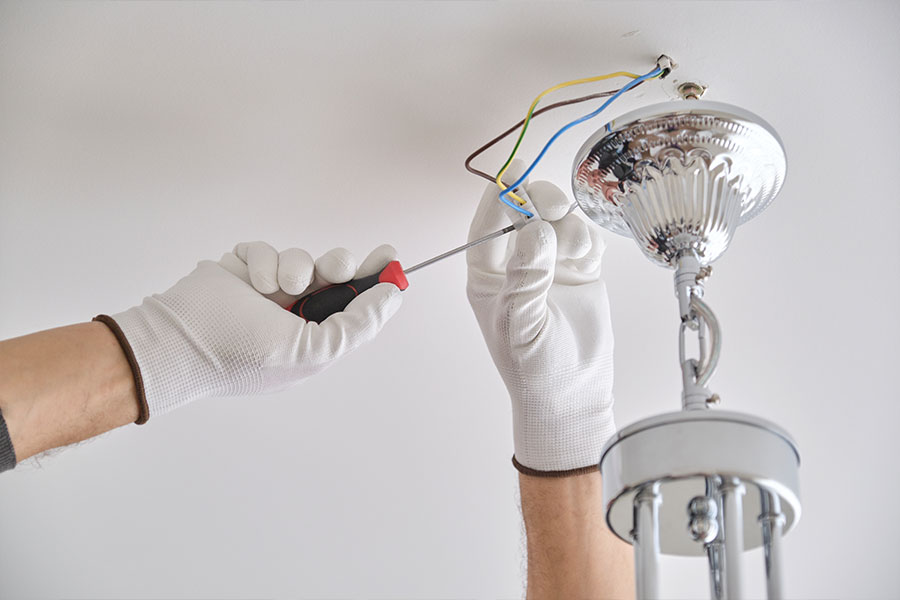
Proper wiring and connections are the backbone of any successful lighting installation. If you want your lights to function safely and efficiently, you need to pay attention to how wires are connected.
Start by turning off the power at the circuit breaker to avoid any shocks. Use the correct gauge wire for your specific lighting needs, as using the wrong size can lead to overheating and potential hazards.
When connecting wires, verify that you strip the insulation correctly and secure connections with wire nuts or electrical tape. Double-check each connection for tightness to prevent future issues.
It’s wise to organize and label your wires for easier troubleshooting down the line. By prioritizing proper wiring and connections, you’ll improve your installation’s safety and reliability, making certain your lighting operates without a hitch.
If you’re unsure, it’s always best to consult with a professional electrician to guarantee everything’s done right.
Consider Energy Efficiency and Sustainability Options
When you’re planning a lighting installation, considering energy efficiency and sustainability options can greatly reduce your long-term costs and environmental impact.
By choosing the right products and practices, you’ll not only save money but additionally contribute to a healthier planet. Here are a few tips to get you started:
- LED Lighting: Opt for LED bulbs instead of traditional incandescent ones. They use less energy, last longer, and emit less heat.
- Smart Controls: Invest in smart lighting controls, like timers and dimmers, to optimize energy use. You’ll have more control over when and how much light you use around your home.
- Solar Options: If possible, consider solar-powered lighting for outdoor areas. It harnesses renewable energy, reducing your reliance on grid electricity.
Hire a Professional Electrician for Safe Installation
Although you might feel tempted to tackle lighting installation on your own, hiring a professional electrician guarantees the job is done safely and efficiently. A skilled electrician knows the ins and outs of local codes and regulations, ensuring your installation meets safety standards.
They’ll likewise use the right tools and techniques to prevent hazards like electrical shocks and fires.
When you choose Crowe Electric, you benefit from 24-hour emergency service and expert installation for all your lighting needs. Their commitment to quality workmanship and trusted products provides you peace of mind.
Plus, their friendly team is dedicated to clear communication, making the entire process smooth and stress-free.
Investing in a professional saves you time and potential headaches down the line. So, don’t hesitate—let Crowe Electric handle your lighting installation for a safe and efficient result you’ll appreciate for years to come.
Conclusion
In the movement of light and shadow, your home deserves to shine safely and efficiently. By understanding local codes, choosing the right fixtures, and planning your layout carefully, you can create a space that sparkles with both beauty and functionality. Don’t forget the importance of quality and energy efficiency—like a well-tuned orchestra, every element plays a crucial role. So, consider hiring a professional to guarantee your lighting installation hits all the right notes.